
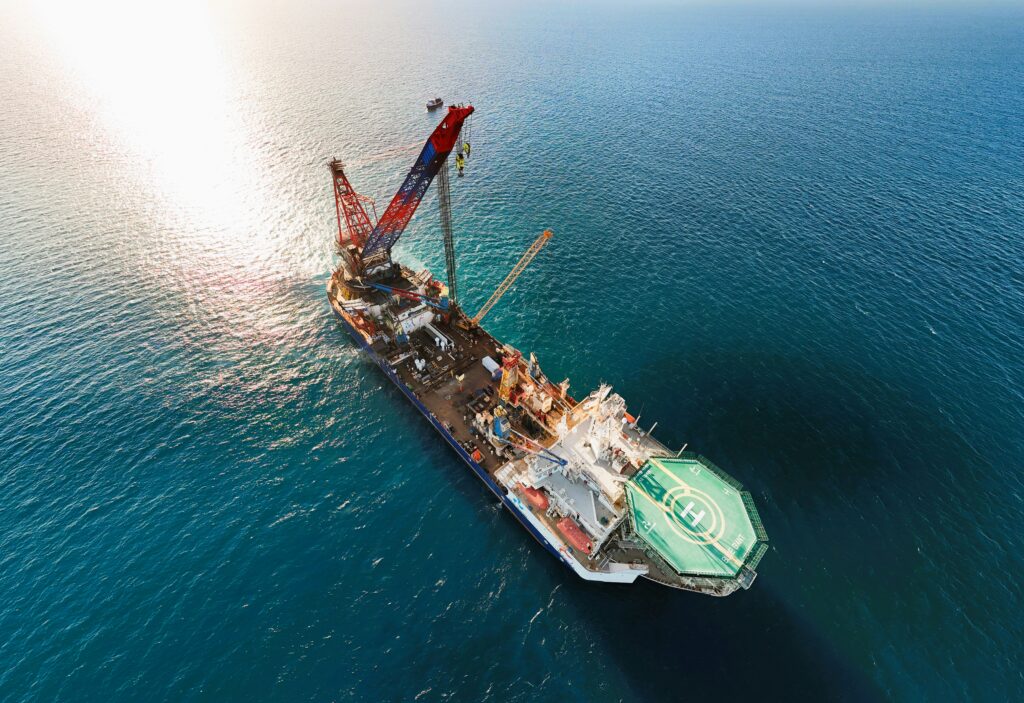

Decommissioning is emerging as Scotland’s next major industrial opportunity, with billions of pounds of spend and thousands of high-value jobs on the line if urgent action is taken to enforce North Sea clean-up obligations.
A new report, After the oil: Jobs and economic impacts from UK offshore decommissioning, by Ebberstone and Transition Economics and commissioned by Redwater Insights, finds that accelerating North Sea decommissioning could create up to 25,000 UK jobs and generate as much as £15 billion in economic benefit. The original Aberdeen Business News coverage can be read here.
Billions in spend, centred on the North-east
The study calculates that timely decommissioning could attract around £25.6 billion in investment from operators, delivering £6.8 billion in direct economic benefit and a further £9 billion in indirect and induced value across the UK economy.
Crucially for Scotland, that spend would underpin a long-term pipeline of work across Aberdeen and the wider east coast, spanning heavy engineering, subsea, marine services and environmental restoration as the basin transitions from production to clean-up.
While decommissioning is only one strand of the UK’s offshore energy transition, a £25bn-plus project pipeline and up to 25,000 jobs makes it a frontline growth opportunity, not a niche sideshow. It has the scale to materially soften the downturn in North Sea production while anchoring new long-term work for Scotland’s offshore workforce.
A fast-closing skills bridge
The report frames decommissioning as a critical “skills bridge” for a workforce facing a sharp downturn as production in the mature basin declines.
It finds that more than 30,000 jobs could be supported in total – including 11,000 direct full-time equivalent posts per year over the next decade, 13,500 indirect jobs in the supply chain, and around 6,000 roles through wider economic spill-overs – while extending the careers of around 15,000 existing oil and gas workers and helping them avoid a “cliff edge” of unemployment.
Redwater Insights Director of Legal Sophie Marjanac said:
“Many North Sea workers are currently facing a cliff edge as projects mature and wind down. When operators delay their clean up responsibilities, this creates further uncertainty for workers and their communities.
“Proper decommissioning will provide a skills bridge for current oil and gas workers and create new jobs along the east coast of the UK, from Aberdeen to Great Yarmouth. We need urgent action to avoid a disaster for jobs, communities and the UK economy.”
Backlog, bottlenecks and regulatory risk
The opportunity comes with urgency. Around 1,700 wells are due to be plugged and abandoned in the next six years, with some 500 already overdue and subject to repeated regulatory extensions.
The report warns that continued delays risk infrastructure degrading further, driving up removal costs, while experienced workers retire or leave the sector entirely – increasing the chance that projects become more expensive, harder to execute and ultimately fall back on the public purse.
“There are more than 500 oil and gas wells currently overdue for plugging and abandonment in the North Sea, with hundreds more expected to reach end-of-life in the next few years.
“Overly flexible regulation means operators are kicking the decommissioning can down the road. But delaying too much longer runs the risk of ballooning costs and highly skilled workers leaving the industry.
“The Treasury could face a significant challenge if cost blowouts cause companies to fail and decommissioning liabilities fall to taxpayers. Meanwhile, regional communities risk being hit harder if the only workers skilled enough to decommission old assets have had to leave the industry because of continued delays.
“There is a fast closing window for proper decommissioning. We need urgent action from government, regulators and most importantly from operators who are legally obliged to ensure their wells are cleaned up properly.”
Making Scotland a decommissioning leader
To capture the prize, the report calls for a tougher, more proactive policy and regulatory framework.
In Case You Missed It:

Key recommendations include increasing the powers of the North Sea Transition Authority to impose binding deadlines, strengthening financial assurance requirements so operators pre-fund decommissioning, ensuring higher levels of local content so work and value remain in UK regions such as the North-east of Scotland, and improving support for workers moving from production into decommissioning roles.
Handled decisively, decommissioning offers Scotland the chance to reposition itself as an international hub for late-life asset management and offshore clean-up – turning the end of the oil era into a new phase of industrial growth rather than managed decline.