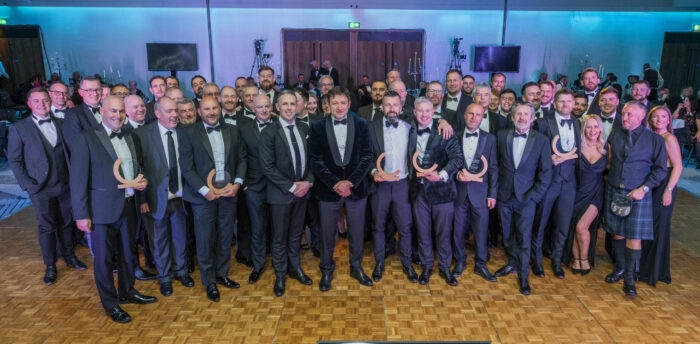


Scottish businesses that postpone key IT infrastructure decisions until after they start expanding internationally risk higher integration costs, operational disruption and a loss of growth momentum. That’s the advice given by Hugh Caldwell, a Director at Texaport, the Edinburgh-based managed service provider which specialises in cloud infrastructure, Microsoft 365, and 24/7 IT operations. The business has emerged as a prime example of how Scottish technology companies can compete internationally through design-led digital infrastructure, a capability that is increasingly central to Scotland’s high‑growth and export‑oriented industries.
Davide Baptiste of Silicon Scotland believes Texaport’s example is a positive example of what can be achieved across the Scottish tech sector, he said: “When a Scottish company like Texaport builds global‑class infrastructure from a Scottish base, it sends exactly the kind of signal our tech sector needs. It shows that you can scale internationally, win complex work and run follow‑the‑sun operations without hollowing out your presence here at home – and that’s very good news for Scotland’s next generation of growth companies.”
Competing Globally
Speaking to Silicon Scotland, Caldwell noted that the firm’s experience reflects how digital transformation has become intertwined with rapid global expansion, especially among acquisition-driven clients. He believes that the removal of geographical limits means those companies that treat their digital infrastructure as a strategic asset will be most effective in their global expansion efforts. Companies that structure such assets to enable acquisitions, support distributed teams and accelerate decision-making will have a significant competitive advantage.
Caldwell advises that “client infrastructure should be designed to scale with the business. Well-managed cloud environments, underpinned by clear governance and standardised policies, allow organisations to absorb the complexity of international growth without slowing it down.”
He points out that “a real risk for Scottish businesses is assuming infrastructure decisions can wait until after growth has happened. By that point, the cost of integration in time, money and operational disruption is significantly higher, and growth momentum can be lost.” Caldwell’s warning mirrors wider guidance from government and industry bodies, which consistently emphasise that security, data governance and cloud architecture are most effective when they are designed in early rather than retrofitted after rapid growth.
This insight underscores a wider shift in the sector: IT is no longer a support function; it is now a strategic framework underpinning scale and competitive edge. As UK M&A activity becomes increasingly international, the demand for unified, secure and scalable IT environments has become a core differentiator for acquisitive companies.
Engineering Follow-the-Sun Operations
Having built its follow-the-sun model directly from its Scottish base, Texaport now supports clients operating across time zones, ensuring uninterrupted service standards worldwide. Caldwell says that the experience has provided clear insight into how to scale technical quality globally while retaining Scottish operational depth: “One of the biggest lessons we’ve learned is that follow‑the‑sun support isn’t really about location, but about process. Clients don’t care where you’re based; they care that you’re capable, available and responsive.
“Delivering a consistent global service requires deliberate design. To maintain the same quality around the clock, the infrastructure behind the service has to be as well‑engineered as the service itself. That means every team operating to the same standards and values, with one set of tools, one security model, and clear ownership at all times. This approach allows us to scale responsibly without losing quality or accountability.
“What Scotland gives us is a stable operational base, a strong talent pipeline, and a culture that takes reliability seriously. Scotland remains our centre of gravity, but our clients experience one consistent Texaport, wherever and whenever they need support.”
In Case You Missed It:
No related posts.
Global Reach from a Scottish Base
Texaport’s evolution highlights how Scottish firms with strong technical foundations can deliver consistent, internationally relevant services without losing their local base. As global expansion becomes increasingly common across the country’s tech sector, this approach is likely to become more valuable in the years ahead, particularly for companies operating in growth sectors such as cloud, cybersecurity, fintech and digitally enabled professional services.