


Heriot-Watt University and Midlothian Council developed the pathway with Bentley Systems software to address skills gaps.
A new qualification, Scotland’s Infrastructure Pathway, has been developed by Heriot-Watt University and Midlothian Council, utilising software from global infrastructure engineering company Bentley Systems. The pathway, launched yesterday (Monday 19th) at Panmure House in Edinburgh, is designed to offer a new route into engineering for secondary pupils across Scotland.
The course aims to give young people hands-on experience with real-world infrastructure through an interactive 3D digital model. This initiative comes as Scotland plans £11.1 billion in infrastructure investment to drive growth, with the construction industry projected to require approximately 2,590 additional workers each year until 2030.
Piloted in four Midlothian schools alongside the University of Edinburgh and Heriot-Watt University, and in association with the University of Glasgow, the pathway culminates in a SCQF Level 6 qualification that is accepted for engineering degree entry. The programme is anticipated to extend to around 40 schools throughout Scotland next year.
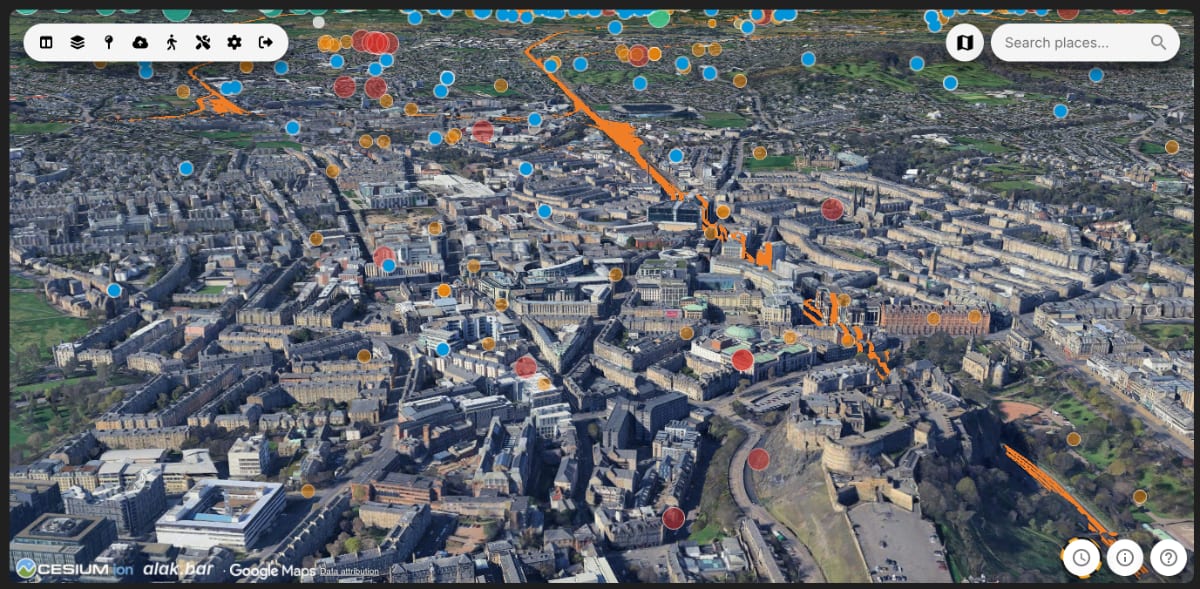
Digital Twin platform (Credit: Heriot-Watt University)
Alex MacLaren, Associate Professor of Architecture at Heriot-Watt University, stated: “The Infrastructure Pathway is the result of three years of work by educators and industry leaders, side by side, to create something Scotland has never had before: a single, connected route from the primary classroom through secondary school, college, university and apprenticeships, and into employment.”
MacLaren also noted: “We believe it is the first initiative of its kind anywhere in the world. It was created by education and industry, for education and industry.” He added that the qualification enables pupils to work directly with universities and industry partners on real infrastructure projects. “Delivering a net zero economy, resilient communities and world-leading digital systems will need thousands of skilled people in engineering, construction, data, AI and environmental science, yet many young people have never been shown these careers. This pathway changes that.”
Central to the pathway is a digital twin, an interactive 3D computer model of real buildings, streets, and energy networks, which engineers use for planning and managing infrastructure. Initially developed to visualise energy data for Heriot-Watt’s campus decarbonisation efforts, the model is constructed with Bentley Systems’ Cesium software.
Pupils can interact with the model to view energy consumption, observe wind turbines feeding electricity into a city, and test their own concepts using real data on wind, energy, water, and live sensors. This practical approach is intended to engage pupils who may not typically excel in conventional maths and science lessons. While industry often requires costly software and computers for such tasks, the pathway operates in a standard web browser on devices like Chromebooks and iPads already used by pupils, and Bentley’s technology is provided free for education.
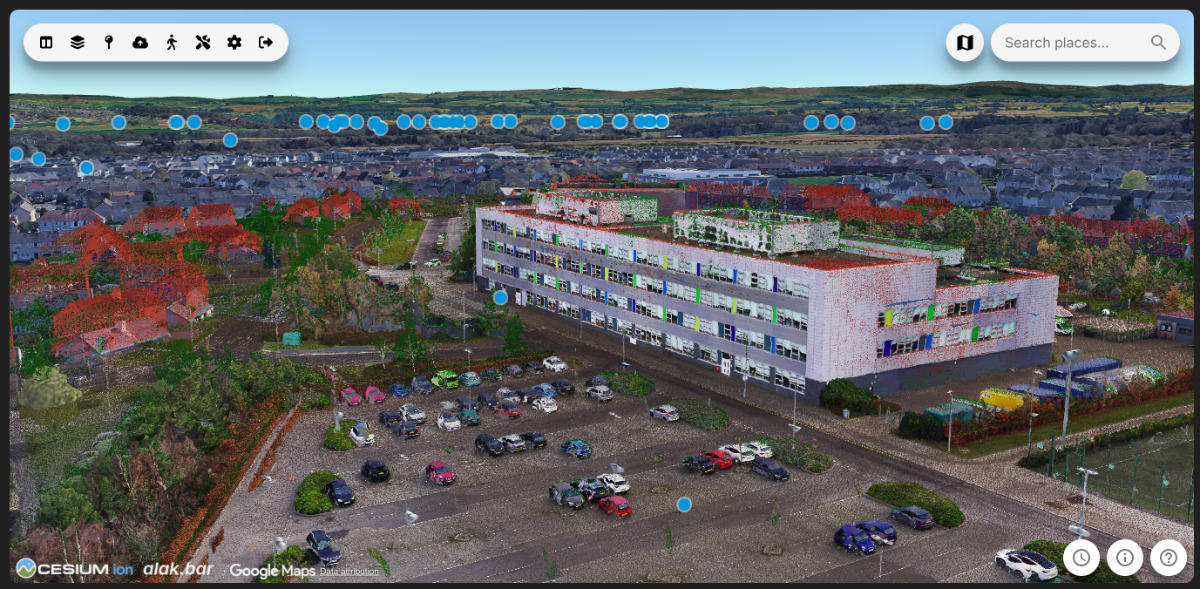
Digital Twin platform (Credit: Heriot-Watt University)
Over an academic year, pupils also collaborate with universities and industry partners, including Mott MacDonald and SSE, on real project scenarios. The qualification is equivalent to an A at Higher for admission to Heriot-Watt’s civil and architectural engineering degrees.
David Robertson, Director – University & Education Partnerships at Bentley Systems, commented: “What makes the Infrastructure Pathway special is that it puts real industry technology into pupils’ hands on the devices they already have, and connects what they learn directly to the careers that exist across Scotland’s infrastructure sector.” Robertson also said: “Scotland is the ideal place to show what’s possible when education and industry work together at a national scale and this is a special project that will help increase education to talented students.”
In Case You Missed It:
 Dundee sustainable engineering specialist Radix tops £9m turnover as growth continues
 Aberdeen’s Decom Engineering smashes annual target as global demand surges
 BGF exits Glasgow’s Walker Precision Engineering as US defence group Karman buys in for £70m
 SaxaVord lines up £60m public-private package to unlock UK orbital launches from Shetland
Professor Nola Hewitt-Dundas, Principal and Vice-Chancellor of Heriot-Watt University, stated: “Scotland’s infrastructure and net zero ambitions depend on a new generation with the skills to deliver them.” She added: “This pathway shows what can be achieved when universities, schools and industry work together to open up those careers to young people, wherever they live and whatever their background.”
Following the launch, the partners are scheduled to hold events for schools and employers in Edinburgh (Tuesday 20 October), Glasgow (Wednesday 21 October), Aberdeen (Thursday 29 October), and Dundee (Friday 30 October).