
Glasgow health tech spinout Nebu~Flow has secured a £2 million research and development grant from Scottish Enterprise to accelerate commercialisation of its nebuliser technology and take it through regulatory approvals in the UK, Europe and the United States. The award adds to a £4.7 million investment round closed in 2024 and earlier public‑sector support, turning a University of Glasgow lab project into a Scottish life sciences scaleup with global ambitions.
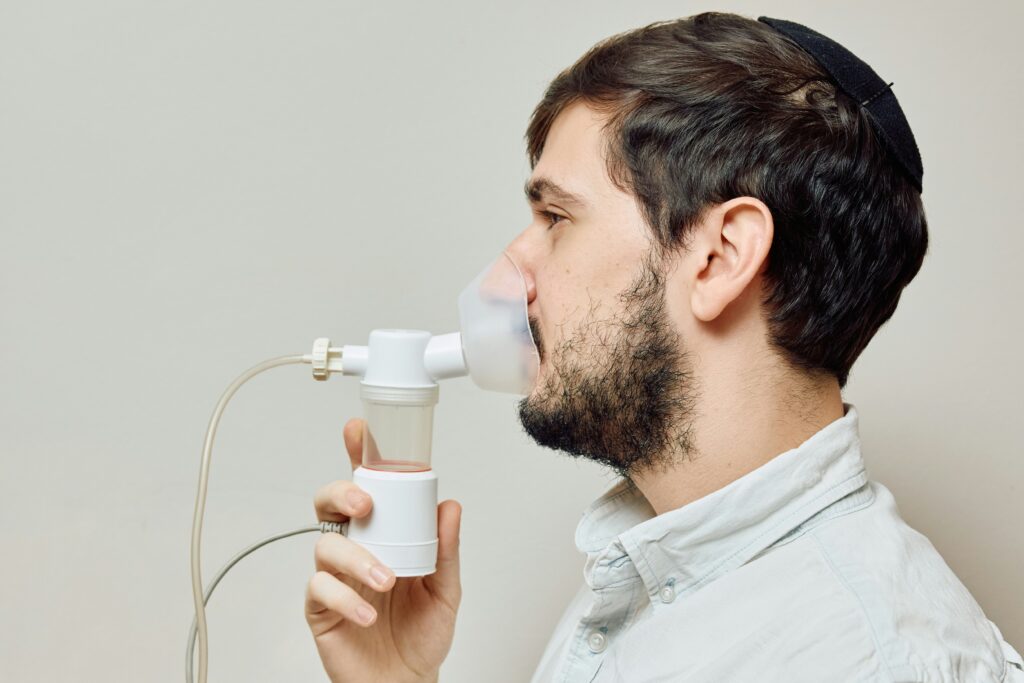
Nebu~Flow, founded in 2019 as a spinout from the University of Glasgow, is developing a new class of nebuliser that uses acoustic waves to turn liquids into precisely controlled droplets which can be inhaled. By controlling droplet size and gentling the aerosolisation process, the company aims to deliver fragile biologics and other hard‑to‑nebulise medicines to the lungs, enabling therapies which conventional nebulisers would damage or waste.
Scottish Enterprise said the £2m grant will fund the move from a working prototype to a fully engineered product, including finalising the device design, carrying out performance testing, and preparing regulatory submissions. Nebu~Flow intends to seek approval to market the nebuliser in the UK and Europe as well as in the United States, positioning the Glasgow firm in a global market for respiratory drug delivery devices.
Chief executive Andrea Cusack described the award as a step change for the business. “This support from Scottish Enterprise is a huge moment for our team,” she said. “It allows us to turn years of Scottish research and engineering into a real product that could make a genuine difference to patients’ lives.”
The funding is the latest stage in a multi‑year public‑investment relationship between Nebu~Flow and Scotland’s economic development agency. Scottish Enterprise has previously backed the company through its Unlocking Ambition entrepreneurship programme, feasibility grant support and equity investment, before moving to this larger R&D grant. Nicola Anderson, director of scaling innovation at Scottish Enterprise, said the agency had nurtured Nebu~Flow’s ambition to transform respiratory drug delivery over a number of years, and framed the new award as support for both the product and the high‑value jobs associated with scaling it.
Nebu~Flow’s trajectory illustrates how that layered model is intended to work in practice. A £1.7 million investment round in 2022, led by Foresight Williams Technology alongside SIS Ventures, Science Creates Ventures and Ascension, helped the company progress its next‑generation nebuliser through early commercial development. It went on to secure an additional £4.7 million of investment in 2024 in a round led by deep‑tech investor SCVC, with Scottish Enterprise and existing backers including Foresight WAE Technology, SIS Ventures, Ascension and the Conduit EIS Impact Fund also participating.
Alongside equity funding, specialist outlet OINDP News has reported that Nebu~Flow received a £1 million Innovate UK award in 2022 to develop its acoustic wave nebulisation technology, underlining UK‑wide public interest in new approaches to inhaled drug delivery. OINDP News also notes that the new Scottish Enterprise grant will support the final phase of device development and preparation for regulatory submission, building directly on those earlier stages.
The health‑economics case for improving inhaled medicines is significant. Scottish Enterprise cites figures suggesting that respiratory conditions such as asthma, chronic obstructive pulmonary disease and cystic fibrosis cost NHS Scotland in the region of £500 million per year, with around 720,000 people currently treated for asthma and 241,000 living with COPD. The agency also highlights projections that COPD cases in Scotland could rise by around 63% between 2019 and 2044, from roughly 134,000 to almost 219,000 people, increasing pressure on services if treatment models do not change.
Nebu~Flow argues that more efficient delivery of modern biologic and RNA‑based therapies to the lungs could help reduce hospital admissions and systemic side‑effects by getting drugs to where they are needed more precisely. Its platform is being trialled with partners in the UK and North America ahead of regulatory submissions, with a view to enabling new inhaled treatments for both respiratory and systemic diseases.
For Scottish Enterprise, the grant is also about anchoring high‑value life sciences activity in Scotland. The agency said Nebu~Flow plans to grow its team in Glasgow as it moves into the final engineering and regulatory phases, creating additional skilled roles in areas such as engineering, clinical development and quality. Cusack has previously said that the company sees Scotland as its base for both R&D and early manufacturing as it prepares for international launch.
In Case You Missed It:


With regulatory submissions now in focus, the next milestones for Nebu~Flow will be formal approvals, deeper partnerships with pharmaceutical and biotech companies, and evidence that its devices can reduce costs and improve outcomes in real‑world settings. For High Growth Scotland readers, the £2 million grant is a signal that Scotland’s public‑investment model is willing to lean in at the capital‑intensive stage of medical device development, not just at seed and feasibility.
G